


How Physical Exercise Impacts Your Dog’s Behavior 🐾
Updated: Aug 27
We often hear that a tired dog is a good dog. While there is some truth to the idea that physical activity can influence behavior, the relationship between exercise and behavior is more nuanced than simply “wearing your dog out.”
The right amount and type of physical activity can support your dog’s emotional well-being, reduce frustration, provide healthy outlets for natural behaviors, and make it easier for them to settle and learn.
But more exercise isn’t always the answer.
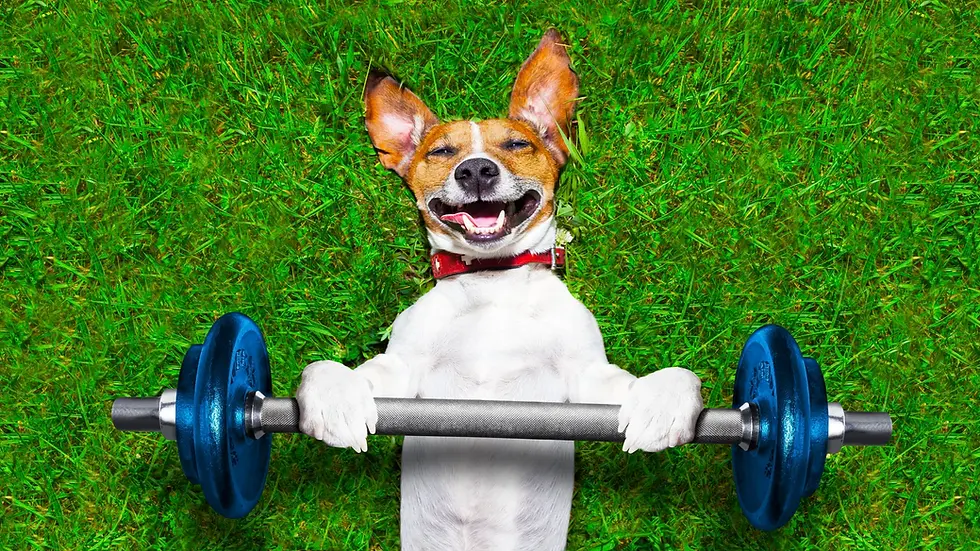
Exercise isn't just about running, playing or working (such as hunting dogs or agility dogs), It's about finding a balance of activities that meets your dogs needs.
🐶 Exercise Helps Meet Natural Needs
Dogs are naturally active animals. Depending on the individual dog, they may have strong needs to walk, explore, sniff, chase, run, dig, carry, or play.
When those needs aren’t being met, a dog may look for their own ways to release energy.
You might see:
Jumping on people
Excessive barking
Destructive chewing
Racing around the house
Attention-seeking behavior
Difficulty settling
Restlessness
Increased frustration
This doesn't necessarily mean your dog is being “bad.”
They may simply be telling you:
“I need something to do.”
Providing appropriate physical activity gives your dog an outlet for those natural behaviors.
🌿 Exercise Can Support Emotional Regulation
Physical activity can help dogs release energy and experience positive stimulation. Regular movement can also contribute to overall physical health and well-being.
But there is an important distinction between healthy exercise and overstimulation.
For example, a dog who spends an hour constantly chasing a ball may come home physically tired but emotionally more aroused.
You may have created a dog who is exhausted—but still unable to relax.
This is why exercise should be balanced with activities that encourage calmness and decompression.
👃 Don't Underestimate the Power of Sniffing
A walk doesn't have to be about distance or speed.
For many dogs, being able to stop and investigate the environment is incredibly valuable.
Sniffing allows dogs to gather information about the world around them. A slower decompression walk, where your dog has opportunities to explore at their own pace, can provide a very different experience from a fast-paced walk around the block.
Sometimes the best walk isn't the one where you go the farthest.
It's the one where your dog gets to be a dog.
⚖️ More Exercise Isn't Always Better
One common mistake is assuming that every challenging behavior means a dog needs more exercise.
A dog who is barking, lunging, pacing, or constantly “hyper” may not simply need more physical activity.
They could also be:
Overstimulated
Anxious
Frustrated
Fearful
Over-tired
Lacking mental enrichment
Struggling with impulse control
Responding to environmental triggers
If we respond by continually increasing physical exercise, we may miss the underlying reason for the behavior.
The goal isn't to create the most exhausted dog possible.
The goal is to create a dog whose physical, mental, and emotional needs are being met.
🧠 Mental Exercise Matters Too
Physical exercise is only one piece of the puzzle.
Dogs also need opportunities to think, explore, problem-solve, and use their senses.
Consider adding:
🐾 Food puzzles
🐾 Scatter feeding
🐾 Sniffing games
🐾 Hide-and-seek
🐾 Trick training
🐾 Shaping exercises
🐾 Find-it games
🐾 Safe chewing opportunities
🐾 Enrichment activities
A few minutes of thoughtful mental enrichment can be surprisingly valuable.
💤 Rest Is Part of the Equation
One of the most overlooked aspects of behavior is rest.
Dogs—especially puppies and young dogs—need adequate opportunities to sleep and relax.
A dog who is constantly stimulated may actually become more difficult to live with, not less.
Learning how to settle is a skill.
Your dog needs to learn that there are times for:
Play → Explore → Learn → Relax → Sleep
A healthy routine includes all of them.
🐕 Every Dog Has Different Exercise Needs
There is no universal exercise prescription for dogs.
A young working-breed dog may have very different needs from an older companion dog.
Breed, age, health, personality, fitness level, environment, and individual preferences all matter.
And remember: behavior should guide us.
If an activity leaves your dog relaxed, satisfied, and able to settle afterward, it may be a good fit.
If an activity consistently leaves your dog frantic, overstimulated, or unable to calm down, it may be time to reconsider the intensity or type of exercise.
❤️ Think Beyond “Tired”
Instead of asking:
“How can I tire my dog out?”
Try asking:
“What does my dog need today?”
Maybe they need a walk.
Maybe they need to sniff.
Maybe they need a training session.
Maybe they need play.
Maybe they need enrichment.
And sometimes, they simply need a quiet day and some rest.
Understanding the difference is an important part of becoming a more observant and responsive dog guardian.
🐾 The Miley’s Mom Approach
At Miley’s Mom Dog Training, we believe behavior isn't about finding a quick way to make a dog “behave.”
It's about understanding the whole dog.
Physical exercise, mental enrichment, emotional safety, rest, communication, and relationship all play a role in helping dogs thrive.
When we meet those needs instead of simply trying to suppress unwanted behavior, we create opportunities for dogs to become calmer, more confident, and better equipped to navigate the world.
Because a well-balanced dog isn't necessarily the dog who is the most tired.
It's the dog whose needs are understood. ❤️🐶
Miley’s Mom Dog Training
Helping You Build Trust, Confidence & Connection Force-Free • Compassion-Based • Relationship-Focused
Cranbrook Dog Trainer
Cranbrook Dog Trainer
Dog Trainer Cranbrook
Cranbrook Dog TrainerCranbrook Dog Trainer
Dog Trainer Cranbrook


Comments